Showing posts with label organisms. Show all posts

Monday, 28 August 2017

Where do our snakes come from?

The snakes we are sequencing for the BABS Genome project were kindly supplied by Nathan Dunstan at Venom Supplies as a collaborative contribution to Paul Waters and Denis O’Meally when they were at ANU. Thanks Nathan!

We have sequenced two Tiger snake parents, originally caught from the southeast of South Australia (just north of Mt Gambier) in about 2004. They were bred at Venom Supplies, and we have also sequenced one of the babies (sex unknown) born in February 2013.

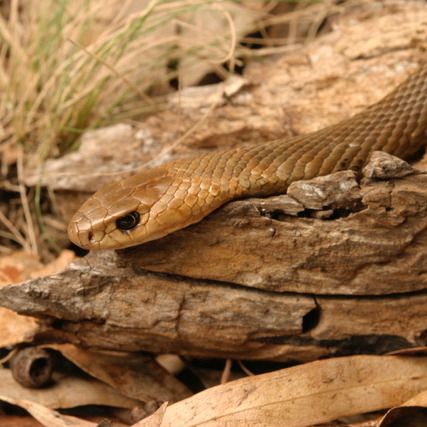
The brown snake was a female from a clutch of eggs from a gravid (pregnant) female caught locally in the Barossa.

Photo Credits

Tiger Snake (left): Teneche [CC BY-SA 3.0] | Brown Snake (right): Denis O'Meally.

Monday, 24 July 2017

We're sequencing snakes! (But the competition's still on...)

Today was the first BABS3291 Genes, Genomes and Evolution lecture and the official opening of the new Ramaciotti Centre for Genomics labs in the shiny new E26 Bioscience South building at UNSW. This seemed like an appropriate day to reveal the chosen organisms for the BABS2017 Genome.

And the answer is... two snake species!

And not just any snakes… the Tiger Snake (left) and Brown snake (right, narrowly avoided by my postdoc Åsa and her partner!) are two of the most deadly snakes in the world. More information will follow in future posts.

Data from the BABS Genome is going to form the core of the seven-week genomics bioinformatics practical at the heart of the coursework for BABS3291. This obviously meant that we needed to start generating data before the course started. We’re still keen to find out what you would like sequenced, though, and the BABS Genome competition remains open for now. Who knows, you may help pick the next genome we do!

Photo Credits

  • Tiger Snake: Teneche - CC BY-SA 3.0. Location: Banyule Flats Reserve, Melbourne, Victoria.

  • Brown Snake: Patrick Dessi. Location: Booroomba Rocks, Namadgi National Park, ACT, Australia.

Sunday, 21 May 2017

Contenders for the 2017 BABS Genome

The BABS Genome Project is a bit different from most genome sequencing efforts, which generally start with an organism of interest. Instead, we are crowd-sourcing what we should sequence, with a few constraints:

  • It should be an iconic Australian species.
  • It should not already have its genome sequenced.
  • We should be able to generate a reasonable draft genome within budget using available technology.
  • We need ready access to samples, from which high molecular weight DNA can be extracted.

The current organisms under consideration are:

Eastern brown snake

Despite its rather dull name and appearance, the Eastern Brown Snake is top of Australian Geographic’s “Australia’s 10 most dangerous snakes” and is the world’s second-most venomous terrestrial snake.

Tiger snake

One of the more visually striking species, the Tiger Snake another venomous snake and third on Australian Geographic’s “Australia’s 10 most dangerous snakes”.

Funnel web spider

The Funnel web spider is a common venomous spider that tops Australian Geographic’s “Australia’s 10 most dangerous spiders” list.

Peacock spider

The peacock spider is a small Australian spider famous for videos of its mating dance.

Clownfish

Made famous by Finding Nemo, the clownfish is an iconic tropical fish that lives in the Great Barrier Reef and forms a symbiotic relationship with sea anemones.

Irukandji jellyfish

Another one on the “Australia’s most deadly” list, the Irukandji jellyfish is a small venomous Box jellyfish with sufficient toxicity to kill a person.

Velvet Worm

Velvet worms are bizarre slime-squirting carnivorous animals with interesting reproductive methods.

Lord Howe Island Stick Insect

The Lord Howe Island Stick Insect is one of the rarest insects in the world and was thought extinct for over 80 years.

Black cockatoo

The Yellow-tailed black cockatoo is not as well know as its sulphur-crested cousin but is another iconic species of south-east Australia. Black cockatoos are under threat from habitat loss and illegal trading, making it a key conservation target.

To get involved, please complete the BABS Genome survey. (BABS students might win a prize!) To add to this list, complete the survey or get in touch.

Photo Credits

Brown snake - Peter Woodard | Tiger snake - Australian Geographic | Funnel web spider - Spiders.com.au | Peacock spider - Jurgen Otto [CC-BY-SA 2.0] | Clownfish – Ritiks [CC-BY-SA 3.0] | Irukandji jellyfish - irukandjijellyfish.com | Velvet worm - onychophora.com © I.S. Oliveira, L. Hering & G. Mayer | Lord Howe Stick Insect - Wikipedia [CC-BY-SA 3.0] | Yellow-tailed black cockatoo – David Cook Wildlife Photography [CC-BY-SA 2.0]